Pages

Friday, December 22, 2017

Can You Solve This Architectural Conundrum?

Henry Gifford is what is known as a building scientist: He studies how buildings work and, just as important, why some don't. He has written and published a remarkable book called Buildings Don't Lie, nearly 600 full-color pages stuffed with information, infrared photography, diagrams, and—the best part—quizzes to test your knowledge.

Advertisement - Continue Reading Below

The book is as beautiful as it is exhaustive, covering air flow, water, light, sound, fire, pests, ventilation, air quality, and a lot more. We'll be covering the subject of building science more in the magazine soon. In the meantime, here's a quiz from the book:

Question: Why is water vapor condensing onto only one of the windows? And why in the middle of the pane only? And which surface of which pane is the water condensing on?

Clue: The photo below was taken during the winter.

.

.

.

Got it?

.

.

.

Answer: The window in the photo has two panes of glass. Multi-pane windows are built with an airtight space between the panes. In the middle window, the air barrier has failed. It is allowing water vapor to get into the space between the panes. The condensation is occurring only in the middle of the pane because the frame of the window conducts much more heat (from indoors) than the glass, and the heat is heating the edges of the glass above the dewpoint temperature, while the middle remains colder than the dewpoint temperature.

Advertisement - Continue Reading Below

The water must be condensing on one of the surfaces between the panes because otherwise the water would evaporate into the indoor or outdoor air. This leaves on the question of which pane the water is condensing onto: the pane on the outdoor side, because that pane is colder during the winter.

Henry Gifford has 25+ years experience making buildings energy efficient, using common sense approaches. You can buy his new book, Buildings Don't Lie, right here.


Source: Can You Solve This Architectural Conundrum?

Thursday, December 21, 2017

Changing exposure with Lee Filters

For the past 50 years, Lee Filters has been the choice of filter manufacturer for discerning photographers who want to manipulate exposure. Angela Nicholson explains the why and the how

A classic long-exposure image, showing flat, milky sea, wispy clouds and the c haracteristic blue cast of a Stopper filter. Nikon D3X, 14-24mm f/2.8 at 24mm, eight minutes at f/11, ISO 100, 0.6 ND hard grad, Super Stopper, blue colour cast uncorrected. Credit: Jeremy Walker

Now in its 50th year, Lee Filters is the world's leading manufacturer of professional-quality light-control filters. The Andover-based company's filters are used not only in photography, but also in motion picture and television productions, theatrical and live stage events, and architectural and themed entertainments.

Within the world of stills photography, Lee Filters has probably been best known for its graduated filters, which enable photographers to balance the exposure of a bright sky with that for the land. However, over the past few years, the Stopper range of filters, which are used to extend exposure time, have become extremely popular. And now a new range of ProGlass IRND neutral-density filters has been launched. So what's the difference between them?

The Stopper range

Lee Filters Stopper filters have been designed to enable photographers to extend exposure times. This has the effect of causing anything that is moving within the frame to become blurred in the final image. It's a popular effect in both seascape and landscape photography, where choppy water is made smooth and clouds or waterfalls are transformed into silky streaks.

There are three strengths of Stopper filter available: the Little Stopper, which extends exposureby six stops; the Big Stopper, which brings a 10-stop extension; and the 15-stop Super Stopper.

The dark appearance of the Stoppers is created by adding dye to the glass when it's still liquid, so the colour is mixed throughout the filter. In addition to the black dye, there's also a hint of blue, as this helps deal with infrared (IR) pollution, which is a particular issue with long exposures and can make blacks appear brown. It's tricky to correct IR pollution issues, but adding blue turns it into a white balance shift, which is much easier to address post-capture. Over the years, many photographers have come to love the blue note of unadjusted Stopper images.

"Long exposures have the effect of causing anything that is moving to become blurred"

Because of the blue tone, Lee Filters doesn't refer to the Stopper Range as being neutral-density (ND) filters – they're called Stoppers because they stop light from entering the lens.

One interesting effect that has also proved popular with the Stopper range is the slight vignette that is created with wideangle lenses. This happens because light at the edges of a wideangle frame enters the filter at a more acute angle then it does with longer lenses, and thus it has to travel through more of the filter. This means more light is cut out.

All Stopper filters have a foam seal to prevent light leaks from spoiling the image

ProGlass IRND filters

Lee Filters developed ProGlass IRND filters many years ago in response to a request from its parent company, Panavision – a movie camera business. Panavision recognised that infrared pollution was causing problems with ND filter use in the movie industry, and that many hours of grading were being spent purely trying to correct for different levels of pollution effect. The solution was for Lee Filters to produce a neutral filter that also cut out infrared light and it has quickly become the number one filter in the film industry. Now, Lee Filters has made this filter available to stills photographers who want a more neutral result than is possible straight from the camera with the Stopper range.

One of the key differences between the Stopper range and the ProGlass IRND filters is that ProGlass filters have a surface coating and there's no dye mixed through the glass. This is a more expensive process, but it means that the filter doesn't cause vignetting with wideangle lenses.

Lee Filters ProGlass IRND filters have a protective coating, but they should be treated with care to avoid damaging the neutral-density layer.


Source: Changing exposure with Lee Filters

Saturday, December 16, 2017

Magnificent Angkor in infrared photography

Source:Ecns.cn Published: 2017/1/18 16:27:40

Photographer Huang Zheng from Southwest China's Sichuan Province has adopted infrared photography to take photos of the temples in Angkor, Cambodia, giving them almost surreal appearance. (Photo/Huang Zheng)


An infrared photograph of Preah Khan temple. Photographer Huang Zheng from Southwest China's Sichuan Province has adopted infrared photography to take photos of the temples in Angkor, Cambodia, giving them almost surreal appearance. (Photo/Huang Zheng)


An infrared photograph of Bayon temple. Photographer Huang Zheng from Southwest China's Sichuan Province has adopted infrared photography to take photos of the temples in Angkor, Cambodia, giving them almost surreal appearance. (Photo/Huang Zheng)


An infrared photograph of Angkor Thom. Photographer Huang Zheng from Southwest China's Sichuan Province has adopted infrared photography to take photos of the temples in Angkor, Cambodia, giving them almost surreal appearance. (Photo/Huang Zheng)


An infrared photograph of Pre Rup, a Hindu temple at Angkor, Cambodia. Photographer Huang Zheng from Southwest China's Sichuan Province has adopted infrared photography to take photos of the temples in Angkor, Cambodia, giving them almost surreal appearance. (Photo/Huang Zheng)


An infrared photograph of Ta Prohm. Photographer Huang Zheng from Southwest China's Sichuan Province has adopted infrared photography to take photos of the temples in Angkor, Cambodia, giving them almost surreal appearance. (Photo/Huang Zheng)


An infrared photograph of Banteay Srei temple dedicated to the Hindu god Shiva. Photographer Huang Zheng from Southwest China's Sichuan Province has adopted infrared photography to take photos of the temples in Angkor, Cambodia, giving them almost surreal appearance. (Photo/Huang Zheng)


An infrared photograph of Beng Mealea temple. Photographer Huang Zheng from Southwest China's Sichuan Province has adopted infrared photography to take photos of the temples in Angkor, Cambodia, giving them almost surreal appearance. (Photo/Huang Zheng)


An infrared photograph of the Terrace of the Elephants. Photographer Huang Zheng from Southwest China's Sichuan Province has adopted infrared photography to take photos of the temples in Angkor, Cambodia, giving them almost surreal appearance. (Photo/Huang Zheng)


An infrared photograph of Ta Prohm. Photographer Huang Zheng from Southwest China's Sichuan Province has adopted infrared photography to take photos of the temples in Angkor, Cambodia, giving them almost surreal appearance. (Photo/Huang Zheng)

 
Source: Magnificent Angkor in infrared photography

Friday, December 15, 2017

An auto-tracking camera stabilizer means you don't have to bug your friends to take videos of you anymore

"Sport mode" is a camera feature that's been around forever, but it still seems like companies can't get the hang of tracking that doesn't involve an obnoxious amount of blurriness. Though we could all ride Segways to film fast-moving objects, shouldn't there be a more efficient way to capture movement?

Enter Taro: a camera stabilizer and auto-tracker that wants to act as your own personal cameraman.

Recently launched on Kickstarter, Taro brings a whole new meaning to "sport mode." Now you can capture or film yourself playing sports, dancing, skateboarding, etc. — anything you've always wanted to film but could never quite figure out how. Just stand in front of Taro for a second and the tracking module (composed of an infrared camera) and a flickering sequential infrared tag will pick up your body's movements and make sure you're always in frame. 

What's the big deal with infrared, you may ask? Well, the infrared tracking allows Taro's algorithm to work insanely fast — according to the campaign's page, they mean fast as in tracking objects going up to 50 MPH. The auto-cut feature automatically detects your speed in order to prevent any unwanted motion, which means less editing for you. 

But what good is an auto-tracker if the camera is jolting around, making the finished product look like a toddler filmed it? The goal for Taro is that the three high-torque motors are able to react quickly to your movements and keep things smooth. Whether you're shooting with an iPhone or DSLR camera, Taro wants it to give you those high quality feels.

Here's Taro in action:

As if the auto-tracker and stabilizer weren't enough, the extra features that come with the device include time-lapse photography, action sequencing, and an assortment of others. Shipping begins in April 2018 — back the campaign and snag the early bird prices starting at $99 here.

Image: taro


Source: An auto-tracking camera stabilizer means you don't have to bug your friends to take videos of you anymore

Thursday, December 14, 2017

White Knight Press Releases Complete Guide Book for Sony DSC-RX10 IV Camera

  December 10, 2017 -- !-- AddToAny BEGIN --> White Knight Press Releases Complete Guide Book for Sony DSC-RX10 IV Camera

White Knight Press has just released Photographer's Guide to the Sony DSC-RX10 IV, a full-color, 269-page guide book covering all features and operations of the highly popular RX10 IV digital camera.

With this book, author Alexander S. White provides users of the RX10 IV with a manual covering all aspects of the camera's operation. Using a tutorial-like approach, the book shows beginning and intermediate photographers how to accomplish things with the RX10 IV, and explains when and why to use the camera's many features.

The book provides details about the camera's shooting modes as well as its menu options for camera settings, playback, setup, video, Wi-Fi, and special effects. The book covers all features of the RX10 IV that are new for this model, including its enhanced focusing system with phase detection autofocus; its ability to use a touch screen for focusing and enlarging images in some situations; and a variety of new or enhanced menu options.

The book includes more than 500 color photographs that illustrate the camera's controls, display screens, and menus. The images include photographs taken using the RX10 IV's Scene mode, with settings optimized for subjects such as landscapes, sunsets, portraits, and action shots; and its Creative Style and Picture Effect menu options, with settings that alter the appearance of images.

The book provides concise introductions to topics such as street photography and infrared photography, and explains how to use the camera's Wi-Fi and Bluetooth features to transfer images to a smartphone or tablet, to control the camera from such a device, and to add location information to images.

The book includes a full discussion of the video features of the RX10 IV, which can shoot HD and 4K (ultra-HD) movies, with manual control of exposure and focus during recording. The book explains the camera's numerous features for professional-level videography, including Picture Profiles that allow adjustment of settings such as gamma curve, black level, knee, and detail. The book describes steps for recording 4K video to an external video recorder using the �clean" video output from the camera's HDMI port.

In three appendices, the book discusses accessories for the RX10 IV, including cases, power sources, remote controls, microphones and external flash units, and includes a list of websites and other resources for further information. The book includes an appendix with �quick tips" on how to take advantage of the camera's features in the most efficient ways possible.

This guide to the RX10 IV includes a detailed index, so the reader can quickly locate information about any particular feature or aspect of the camera.

The book is available now in ebook formats and a paperback edition.

Read the full story at http://www.prweb.com/releases/2017/12/prweb14999127.htm.

Related Keywords:

Source:PRWEB.COM Newswire. All Rights Reserved


Source: White Knight Press Releases Complete Guide Book for Sony DSC-RX10 IV Camera

Tuesday, December 12, 2017

An auto-tracking camera stabilizer means you don't have to bug your friends to take videos of you anymore

"Sport mode" is a camera feature that's been around forever, but it still seems like companies can't get the hang of tracking that doesn't involve an obnoxious amount of blurriness. Though we could all ride Segways to film fast-moving objects, shouldn't there be a more efficient way to capture movement?

Enter Taro: a camera stabilizer and auto-tracker that wants to act as your own personal cameraman.

Recently launched on Kickstarter, Taro brings a whole new meaning to "sport mode." Now you can capture or film yourself playing sports, dancing, skateboarding, etc. — anything you've always wanted to film but could never quite figure out how. Just stand in front of Taro for a second and the tracking module (composed of an infrared camera) and a flickering sequential infrared tag will pick up your body's movements and make sure you're always in frame. 

What's the big deal with infrared, you may ask? Well, the infrared tracking allows Taro's algorithm to work insanely fast — according to the campaign's page, they mean fast as in tracking objects going up to 50 MPH. The auto-cut feature automatically detects your speed in order to prevent any unwanted motion, which means less editing for you. 

But what good is an auto-tracker if the camera is jolting around, making the finished product look like a toddler filmed it? The goal for Taro is that the three high-torque motors are able to react quickly to your movements and keep things smooth. Whether you're shooting with an iPhone or DSLR camera, Taro wants it to give you those high quality feels.

Here's Taro in action:

As if the auto-tracker and stabilizer weren't enough, the extra features that come with the device include time-lapse photography, action sequencing, and an assortment of others. Shipping begins in April 2018 — back the campaign and snag the early bird prices starting at $99 here.

Image: taro


Source: An auto-tracking camera stabilizer means you don't have to bug your friends to take videos of you anymore

Sunday, December 10, 2017

White Knight Press Releases Complete Guide Book for Sony DSC-RX10 IV Camera

  December 10, 2017 -- !-- AddToAny BEGIN --> White Knight Press Releases Complete Guide Book for Sony DSC-RX10 IV Camera

White Knight Press has just released Photographer's Guide to the Sony DSC-RX10 IV, a full-color, 269-page guide book covering all features and operations of the highly popular RX10 IV digital camera.

With this book, author Alexander S. White provides users of the RX10 IV with a manual covering all aspects of the camera's operation. Using a tutorial-like approach, the book shows beginning and intermediate photographers how to accomplish things with the RX10 IV, and explains when and why to use the camera's many features.

The book provides details about the camera's shooting modes as well as its menu options for camera settings, playback, setup, video, Wi-Fi, and special effects. The book covers all features of the RX10 IV that are new for this model, including its enhanced focusing system with phase detection autofocus; its ability to use a touch screen for focusing and enlarging images in some situations; and a variety of new or enhanced menu options.

The book includes more than 500 color photographs that illustrate the camera's controls, display screens, and menus. The images include photographs taken using the RX10 IV's Scene mode, with settings optimized for subjects such as landscapes, sunsets, portraits, and action shots; and its Creative Style and Picture Effect menu options, with settings that alter the appearance of images.

The book provides concise introductions to topics such as street photography and infrared photography, and explains how to use the camera's Wi-Fi and Bluetooth features to transfer images to a smartphone or tablet, to control the camera from such a device, and to add location information to images.

The book includes a full discussion of the video features of the RX10 IV, which can shoot HD and 4K (ultra-HD) movies, with manual control of exposure and focus during recording. The book explains the camera's numerous features for professional-level videography, including Picture Profiles that allow adjustment of settings such as gamma curve, black level, knee, and detail. The book describes steps for recording 4K video to an external video recorder using the �clean" video output from the camera's HDMI port.

In three appendices, the book discusses accessories for the RX10 IV, including cases, power sources, remote controls, microphones and external flash units, and includes a list of websites and other resources for further information. The book includes an appendix with �quick tips" on how to take advantage of the camera's features in the most efficient ways possible.

This guide to the RX10 IV includes a detailed index, so the reader can quickly locate information about any particular feature or aspect of the camera.

The book is available now in ebook formats and a paperback edition.

Read the full story at http://www.prweb.com/releases/2017/12/prweb14999127.htm.

Related Keywords:

Source:PRWEB.COM Newswire. All Rights Reserved


Source: White Knight Press Releases Complete Guide Book for Sony DSC-RX10 IV Camera

Saturday, December 9, 2017

Sotheby's Department Of Scientific Research Celebrates First Anniversary

NEW YORK, Dec. 5, 2017 /PRNewswire/ --�One year ago today, Sotheby's (NYSE: BID) announced the acquisition of Orion Analytical, the leading materials analysis and consulting firm in the art world, and hired its founder, Jamie Martin, to establish a Department of Scientific Research.� It was the first � and still only � department of its kind in the auction world.� In just one year, dramatic progress has been made in the integration of science and technology with the world-class expertise and provenance research behind the works of art, objects and wine offered by Sotheby's.

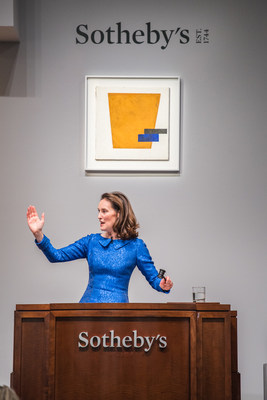
Sotheby's groundbreaking Scientific Research Department celebrates its first anniversary - hundreds of objects totaling more than $100 million were examined in 2017 across fine art, wine, porcelain and more, including this 'Suprematist' painting by Kazimir Malevich that sold for $21.2 million this spring.

Jamie Martin, Director of Sotheby's groundbreaking Department of Scientific Research, commented: "It's been an incredibly energizing year for me at Sotheby's. I'm particularly inspired by my work with specialists worldwide � it is the combination of their art historical knowledge with our laboratories' analysis that has led to our most impactful determinations. In 2018 I look forward to expanding our capabilities both geographically and into a greater variety of materials, as Sotheby's world affords us access to the very best of fine art, furniture, wine and beyond."

State-of-the-art laboratory opened in Sotheby's New York headquartersOnly the 4th laboratory in the United States,Alongside Metropolitan Museum of Art, National Gallery of Art and J. Paul Getty Museum,To Acquire a Bruker M6 Jetstream: Revolutionary German X-Ray Fluorescence TechnologyThat Maps the Composition of Works

Facility in London Opened to Serve the United Kingdom and Continental EuropePlans to Establish a Similar Facility in Hong KongPortable Capability Available for Worldwide Use

Collaboration with Sotheby's Specialists Across 15 Different Collecting Categories in New York, London, Paris, Geneva and Hong KongTo Examine Hundreds of Paintings, Works on Paper, Bronze and Stone Sculpture,Furniture and Wine Valued at More than $100 Million� Investigating Construction, Composition, and Condition andProviding Leads for Attributions and Dispute Resolutions �

Additional Staff Recruited Including:Technical Art Historian & Research Coordinator, Assistant Conservation Scientist andLondon Project Administrator

CASE STUDYMaterials analysis revealed an unusual blue paint in Kazimir Malevich's painting Suprematist Composition with Plane in Projection, and infrared photography revealed changes the artist made in the composition at an earlier stage.

Further research into the blue paint led the Sotheby's Scientific Research Department to another painting by the artist in the collection of the Art Institute of Chicago: Painterly Realism of a Football Player � Color Masses in the 4th Dimension, 1915. Not only did both works contain the same blue paint additive (basic magnesium carbonate); both paintings also revealed changes Malevich made to the compositions throughout the execution process.

The analysis conducted by Scientific Research Department, together with provenance research conducted by specialists in Sotheby's Impressionist & Modern Art Department, provided insight into unique materials and creative processes, lending physical evidence in support of the art historical understanding of the painting and the artist's greater oeuvre.�

Suprematist Composition with Plane in Projection, 1915 was sold at Sotheby's in New York on May 16, 2017 for $21.2 million after a prolonged battle between four bidders � topping its $18 million high estimate, and marking the 4th-highest auction price for Kazimir Malevich.

About Sotheby's Twitter: www.twitter.com/sothebys�Instagram: www.instagram.com/sothebys��Facebook: www.facebook.com/sothebys�Snapchat ID: sothebysYouTube: www.youtube.com/SothebysTV��Weibo: www.weibo.com/sothebyshongkong�WeChat ID: sothebyshongkong

Sotheby's has been uniting collectors with world-class works of art since 1744. Sotheby's became the first international auction house when it expanded from London to New York (1955), the first to conduct sales in Hong Kong (1973), India (1992) and France (2001), and the first international fine art auction house in China (2012). Today, Sotheby's presents auctions in 10 different salesrooms, including New York, London, Hong Kong and Paris, and Sotheby's BidNow program allows visitors to view all auctions live online and place bids from anywhere in the world. Sotheby's offers collectors the resources of Sotheby's Financial Services, the world's only full-service art financing company, as well as the collection advisory services of its subsidiary, Art Agency, Partners.� Sotheby's presents private sale opportunities in more than 70 categories, including S|2, the gallery arm of Sotheby's Global Fine Art Division, and two retail businesses, Sotheby's Diamonds and Sotheby's Wine. Soth eby's has a global network of 80 offices in 40 countries and is the oldest company listed on the New York Stock Exchange (BID).

Browse sale catalogues, view original content, stream live auctions and more at www.sothebys.com, and through Sotheby's apps for iPhone, iPad, Android, Apple TV and Amazon Fire.

New York | +1 212 606 7176 | Lauren Gioia | [email protected] | Dan Abernethy | [email protected]�London | +44 207 293 6000 | Mitzi Mina | [email protected]

View original content with multimedia:http://www.prnewswire.com/news-releases/sothebys-department-of-scientific-research-celebrates-first-anniversary-300566695.html

SOURCE Sotheby's

Copyright 2014 PR Newswire. All Rights Reserved

Related Keywords:Computers/Peripherals,Notebook/Laptop,Tablets,Computers/Home Office,Communications,Digital Photography,Digital Audio,Digital Toys,Tablets,Networks,Handheld,iPhone,tablet,Technology,iPods,iphone,iPad,Tablet,iPhone,Mac,Android,OS9,OSX,Apple Computer,Sports,

Source:PR Newswire. All Rights Reserved


Source: Sotheby's Department Of Scientific Research Celebrates First Anniversary

Friday, December 8, 2017

Sotheby̢۪s scientists just scored a big win in the battle against fake art

Here's another example of why science pays, kids. It was exactly one year ago today that Sotheby's announced the acquisition of Orion Analytical, a materials analysis and consulting firm whose crack team of scientists—led by the noted art-fraud guru Jamie Martin—would use their forensic skills to detect fake artworks.

The famed auction house then established its Department of Scientific Research, which is the only facility of its kind in the art-auction industry.

In honor of the department's first anniversary, Sotheby's today is revealing one of its recent coups: Researchers did a materials analysis on a 1915 work by Kazimir Malevich, the pioneering Russian abstract artist, to help verify that it was the real thing. As it turned out, the painting contained the same unusual blue paint additive as another Malevich work from the time period—this one in the collection of the Art Institute of Chicago. Researchers also examined both works with infrared photography to discover they both contained similar hidden changes that Malevich made during the composition process.

The painting, Suprematist Composition With Plane in Projection, went on to sell for $21.2 million at Sotheby's New York headquarters earlier this year after a fierce bidding war, so you can see there's a lot at stake here. It was the fourth-highest auction price ever for a Malevich work.

"It's been an incredibly energizing year for me at Sotheby's," Martin said in a statement. "I'm particularly inspired by my work with specialists worldwide—it is the combination of their art historical knowledge with our laboratories' analysis that has led to our most impactful determinations."

The takeaway? If at all possible, you should definitely hire in-house scientists because they pay for themselves. Sotheby's says it has established state-of-the-art laboratories in both New York and London and plans to expand to Hong Kong, as well.

You can learn more about Martin's forensic work and the research department here.

A painting by Kazimir Malevich is analyzed to help determine its authenticity.

CZ


Source: Sotheby's scientists just scored a big win in the battle against fake art

Thursday, December 7, 2017

Taro, the Automated “Camera-Mate” with Auto-Tracking & Stabilizing Infrared Technology, Raises more than $100,000 on Kickstarter

  December 07, 2017 -- !-- AddToAny BEGIN --> Taro, the Automated �Camera-Mate� with Auto-Tracking & Stabilizing Infrared Technology, Raises more than $100,000 on Kickstarter

Taro, the hands-free tracking stabilizer for smartphones and DSLR cameras that combines infrared technology and artificial Intelligence (AI) to follow the action and keep it in-frame, has raised more than $100,000 on Kickstarter.

�We're grateful for the response and support we've received from all our backers on Kickstarter, and encourage other videographers and filmmakers to check out our �automated camera mate' while it can still be purchased at a discount during our last two weeks of crowdfunding," said Taro founder, Hao Qian.

In developing Taro, Qian's team essentially designed a robot that operates a camera just like a real cameraman can. With its blazingly-fast infrared tracking algorithm that performs 30 calculations per second, Taro can track objects moving as fast as 50 miles per hour.

The secret to Taro's tracking system lies in the combination of a flickering sequential infrared tag and tracking module that contains an infrared camera � both working in tandem to rapidly identify which part of the frame is integral to a dynamic action sequence.

�Taro can instantaneously establish the intended object's approximate location," he said. �Taro also has a powerful learning algorithm that immediately eliminates sub-optimal positioning, precisely pinpointing the object's exact location � which results in the perfect balance between efficiency and accuracy."

The Taro Team got the inspiration for the device from a skateboarder when he was explaining the difficulty he was having while trying to capture footage of the fast-moving sport.

�When filming fast-moving sports activities like skateboarding, it's often necessary to capture an object when we ourselves are also moving at high speed, so it can be a real challenge to simultaneously pay attention to both our own movements and the screen�which often leads to an object being out of frame," Qian said. �With Taro's Dynamic Tracking, and our auto-tracking technology, camera operators are ensured the target is always in frame - and without having to focus on their screen, either."

Taro also incorporates a stabilizer that uses motors to neutralize camera-shake, and is equipped with three ultra-high torque, brushless motors which react much faster than any other products on the market today, which guarantees the user has a radically smoother shooting experience.

Features include:

  • Auto-tracking
  • Dynamic tracking (Tracking even when the cameraman is also moving)
  • Maximum stability (Eliminate video jitter)
  • Stabilizer Compatible (Turning any existing Bluetooth stabilizer into an auto-tracking one)
  • Action Sequencing (Turning a normal video into action sequence photo or videos)
  • Auto-Cut (Auto-cutting automatically, thus detecting and eliminating unwanted motion to ensure captured footage is as good as it can be)
  • Other features include action sequencing, following titles, auto-cuts, filters, and time-lapse photography and �all kinds of goodies and cool effects" � with lots more in the pipeline.

    �Taro is truly a breakthrough product that automatically rotates and tracks your target, making it possible to free up your hands and put yourself squarely in the frame to accurately capture all the action�and effortlessly," Qian said.

    The Taro smartphone ($199) and DSLR ($599) kits are now available as well its tracking module ($99), which can be used with existing Bluetooth stabilizers and updated with Taro's auto-tracking technology.

    To pre-purchase Taro at early-bird crowdfunding discounts during crowdfunding, visit the Taro Campaign Page on Kickstarter.

    About Taro Technology Inc.Located in Los Angeles, Calif., Taro Technology is made up of a group of software developers who have focused on App development for seven years, successfully developed 12 Apps and accumulated more than 11 million users. The company has worked with the world's major class suppliers who serve companies including Samsung, Apple, DJI and many other world-famous brands. For more information, visit TARO.ai.

    Read the full story at http://www.prweb.com/releases/2017/12/prweb14993081.htm.

    Related Keywords:

    Source:PRWEB.COM Newswire. All Rights Reserved


    Source: Taro, the Automated "Camera-Mate" with Auto-Tracking & Stabilizing Infrared Technology, Raises more than $100,000 on Kickstarter

    Wednesday, December 6, 2017

    Sotheby's Department of Scientific Research celebrates first anniversary

    NEW YORK, NY.- One year ago today, Sotheby's announced the acquisition of Orion Analytical, the leading materials analysis and consulting firm in the art world, and hired its founder, Jamie Martin, to establish a Department of Scientific Research. It was the first – and still only – department of its kind in the auction world. In just one year, dramatic progress has been made in the integration of science and technology with the world-class expertise and provenance research behind the works of art, objects and wine offered by Sotheby's.

    Jamie Martin, Director of Sotheby's groundbreaking Department of Scientific Research, commented: "It's been an incredibly energizing year for me at Sotheby's. I'm particularly inspired by my work with specialists worldwide – it is the combination of their art historical knowledge with our laboratories' analysis that has led to our most impactful determinations. In 2018 I look forward to expanding our capabilities both geographi cally and into a greater variety of materials, as Sotheby's world affords us access to the very best of fine art, furniture, wine and beyond."

    State-of-the-art laboratory opened in Sotheby's New York headquarters

    • Only the 4th laboratory in the United States,

    • Alongside The Metropolitan Museum of Art, National Gallery of Art and J. Paul Getty Museum,

    • To Acquire a Bruker M6 Jetstream: Revolutionary German X-Ray Fluorescence Technology that Maps the Composition of Works

    Facility in London Opened to Serve the United Kingdom and Continental Europe

    • Plans to Establish a Similar Facility in Hong Kong

    • Portable Capability Available for Worldwide Use

    Collaboration with Sotheby's Specialists Across 15 Different Collecting Categories in New York, London, Paris, Geneva and Hong Kong

    • To Examine Hundreds of Paintings, Works on Paper, Bronze and Stone Sculpture, Furniture and Wine Valued at More than $100 Million

    • Investigating Construction, Composition, and Condition and Providing Leads for Attributions and Dispute Resolutions

    Additional Staff Recruited Including:

    • Technical Art Historian & Research Coordinator, Assistant Conservation Scientist and London Project Administrator

    CASE STUDYMaterials analysis revealed an unusual blue paint in Kazimir Malevich's painting Suprematist Composition with Plane in Projection, and infrared photography revealed changes the artist made in the composition at an earlier stage.

    Further research into the blue paint led the Sotheby's Scientific Research Department to another painting by the artist in the collection of the Art Institute of Chicago: Painterly Realism of a Football Player – Color Masses in the 4th Dimension, 1915. Not only did both works contain the same blue paint additive (basic magnesium carbonate); both paintings also revealed changes Malevich made to the compositions throughout the execution proce ss.

    The analysis conducted by Scientific Research Department, together with provenance research conducted by specialists in Sotheby's Impressionist & Modern Art Department, provided insight into unique materials and creative processes, lending physical evidence in support of the art historical understanding of the painting and the artist's greater oeuvre.

    Suprematist Composition with Plane in Projection, 1915 was sold at Sotheby's in New York on May 16, 2017 for $21.2 million after a prolonged battle between four bidders – topping its $18 million high estimate, and marking the 4th-highest auction price for Kazimir Malevich.


    Source: Sotheby's Department of Scientific Research celebrates first anniversary

    Tuesday, December 5, 2017

    Sotheby's Department Of Scientific Research Celebrates First Ann - KTVN Channel 2 - Reno Tahoe Sparks News, Weather, Video

    Information contained on this page is provided by an independent third-party content provider. Frankly and this Site make no warranties or representations in connection therewith. If you are affiliated with this page and would like it removed please contact pressreleases@franklyinc.com

    SOURCE Sotheby's

    The Groundbreaking Department Remains Unique in the Auction World

    Hundreds of Objects Totaling $100+ Million Examined in 2017, Across Fine Art, Wine, Porcelain and More

    Including a 'Suprematist' Painting by Kazimir Malevich Sold for $21.2 Million This Spring

    State-of-the-Art Laboratories Established in New York and London, With Plans to Expand in Hong Kong

    NEW YORK, Dec. 5, 2017 /PRNewswire/ -- One year ago today, Sotheby's (NYSE: BID) announced the acquisition of Orion Analytical, the leading materials analysis and consulting firm in the art world, and hired its founder, Jamie Martin, to establish a Department of Scientific Research.  It was the first – and still only – department of its kind in the auction world.  In just one year, dramatic progress has been made in the integration of science and technology with the world-class expertise and provenance research behind the works of art, objects and wine offered by Sotheby's.

    Sotheby's groundbreaking Scientific Research Department celebrates its first anniversary - hundreds of objects totaling more than $100 million were examined in 2017 across fine art, wine, porcelain and more, including this 'Suprematist' painting by Kazimir Malevich that sold for $21.2 million this spring.

    Jamie Martin, Director of Sotheby's groundbreaking Department of Scientific Research, commented: "It's been an incredibly energizing year for me at Sotheby's. I'm particularly inspired by my work with specialists worldwide – it is the combination of their art historical knowledge with our laboratories' analysis that has led to our most impactful determinations. In 2018 I look forward to expanding our capabilities both geographically and into a greater variety of materials, as Sotheby's world affords us access to the very best of fine art, furniture, wine and beyond."

    State-of-the-art laboratory opened in Sotheby's New York headquartersOnly the 4th laboratory in the United States,Alongside Metropolitan Museum of Art, National Gallery of Art and J. Paul Getty Museum,To Acquire a Bruker M6 Jetstream: Revolutionary German X-Ray Fluorescence TechnologyThat Maps the Composition of Works

    Facility in London Opened to Serve the United Kingdom and Continental EuropePlans to Establish a Similar Facility in Hong KongPortable Capability Available for Worldwide Use

    Collaboration with Sotheby's Specialists Across 15 Different Collecting Categories in New York, London, Paris, Geneva and Hong KongTo Examine Hundreds of Paintings, Works on Paper, Bronze and Stone Sculpture,Furniture and Wine Valued at More than $100 Million– Investigating Construction, Composition, and Condition andProviding Leads for Attributions and Dispute Resolutions –

    Additional Staff Recruited Including:Technical Art Historian & Research Coordinator, Assistant Conservation Scientist andLondon Project Administrator

    CASE STUDYMaterials analysis revealed an unusual blue paint in Kazimir Malevich's painting Suprematist Composition with Plane in Projection, and infrared photography revealed changes the artist made in the composition at an earlier stage.

    Further research into the blue paint led the Sotheby's Scientific Research Department to another painting by the artist in the collection of the Art Institute of Chicago: Painterly Realism of a Football Player – Color Masses in the 4th Dimension, 1915. Not only did both works contain the same blue paint additive (basic magnesium carbonate); both paintings also revealed changes Malevich made to the compositions throughout the execution process.

    The analysis conducted by Scientific Research Department, together with provenance research conducted by specialists in Sotheby's Impressionist & Modern Art Department, provided insight into unique materials and creative processes, lending physical evidence in support of the art historical understanding of the painting and the artist's greater oeuvre. 

    Suprematist Composition with Plane in Projection, 1915 was sold at Sotheby's in New York on May 16, 2017 for $21.2 million after a prolonged battle between four bidders – topping its $18 million high estimate, and marking the 4th-highest auction price for Kazimir Malevich.

    About Sotheby's Twitter: www.twitter.com/sothebys Instagram: www.instagram.com/sothebys  Facebook: www.facebook.com/sothebys Snapchat ID: sothebysYouTube: www.youtube.com/SothebysTV  Weibo: www.weibo.com/sothebyshongkong WeChat ID: sothebyshongkong

    Sotheby's has been uniting collectors with world-class works of art since 1744. Sotheby's became the first international auction house when it expanded from London to New York (1955), the first to conduct sales in Hong Kong (1973), India (1992) and France (2001), and the first international fine art auction house in China (2012). Today, Sotheby's presents auctions in 10 different salesrooms, including New York, London, Hong Kong and Paris, and Sotheby's BidNow program allows visitors to view all auctions live online and place bids from anywhere in the world. Sotheby's offers collectors the resources of Sotheby's Financial Services, the world's only full-service art financing company, as well as the collection advisory services of its subsidiary, Art Agency, Partners.  Sotheby's presents private sale opportunities in more than 70 categories, including S|2, the gallery arm of Sotheby's Global Fine Art Division, and two retail businesses, Sotheby's Diamonds and Sotheby's Wine. Sothe by's has a global network of 80 offices in 40 countries and is the oldest company listed on the New York Stock Exchange (BID).

    Browse sale catalogues, view original content, stream live auctions and more at www.sothebys.com, and through Sotheby's apps for iPhone, iPad, Android, Apple TV and Amazon Fire.

    New York | +1 212 606 7176 | Lauren Gioia | Lauren.Gioia@Sothebys.com | Dan Abernethy | Dan.Abernethy@Sothebys.com London | +44 207 293 6000 | Mitzi Mina | Mitzi.Mina@Sothebys.com

    View original content with multimedia:http://www.prnewswire.com/news-releases/sothebys-department-of-scientific-research-celebrates-first-anniversary-300566695.html

    ©2017 PR Newswire. All Rights Reserved.


    Source: Sotheby's Department Of Scientific Research Celebrates First Ann - KTVN Channel 2 - Reno Tahoe Sparks News, Weather, Video

    Sunday, December 3, 2017

    Infrared Flash Photos on the New York High Line

    Most photographers have heard of infrared photography and many have shot with infrared film or digital cameras converted to infrared. However, few have had the opportunity to experiment with infrared flash photography. For me, the cool thing about shooting with infrared flash is that you can shoot candid street photography, and also handheld architectural night shots.

    Infrared Flash Photography (1)

    Infrared Flash Photography (1)

    NIKON D800 + 50mm f/1.8 @ 50mm, ISO 1600, 1/125, f/5.6

    New York famous High Line runs 1.45 miles from Ganesvoort Street to 34th Street and has great views of the Hudson River, Chelsea, and surrounding neighborhoods. I chose to shoot on the High Line because I knew its trees and foliage would appear ethereal when photographed with infrared.

    Infrared Flash Photography (2)

    Infrared Flash Photography (2)

    NIKON D800 + 50mm f/1.8 @ 50mm, ISO 1600, 1/125, f/3.2 Infrared Flash Photography (3)

    Infrared Flash Photography (3)

    NIKON D800 + 50mm f/1.8 @ 50mm, ISO 1600, 1/125, f/4.0

    To prepare for a night of infrared flash photography, I had LifePixel convert my Nikon D800 to standard, 720nm infrared and bought a Sunpak 622 Super Pro-System Flash with an IR infrared head. I used a Wein Safe-Sync hot shoe to connect the sync cord from the flash in order to avoid damaging the camera should the trigger voltage of the flash be too high.

    Infrared Flash Photography (4)

    Infrared Flash Photography (4)

    NIKON D800 + 50mm f/1.8 @ 50mm, ISO 1600, 1/125, f/5.6 Infrared Flash Photography (5)

    Infrared Flash Photography (5)

    NIKON D800 + 50mm f/1.8 @ 50mm, ISO 1600, 1/125, f/7.1

    By the way, mirrorless cameras work well, too, but because focusing takes place at the sensor level, installing a dark infrared filter makes it much harder for the camera to acquire focus in low light. For this reason I used a DSLR with a fast lens, and everything worked out perfectly. Just be sure, to test the lens so you can adjust for infrared focusing. Or better yet, send the lens you plan on using to LifePixel so they can shim it accordingly.

    Infrared Flash Photography (6)

    Infrared Flash Photography (6)

    NIKON D800 + 50mm f/1.8 @ 50mm, ISO 1600, 1/125, f/5.6 Infrared Flash Photography (7)

    Infrared Flash Photography (7)

    NIKON D800 + 50mm f/1.8 @ 50mm, ISO 1600, 1/125, f/5.6 Infrared Flash Photography (8)

    Infrared Flash Photography (8)

    NIKON D800 + 50mm f/1.8 @ 50mm, ISO 1600, 1/125, f/7.1 Infrared Flash Photography (9)

    Infrared Flash Photography (9)

    NIKON D800 + 50mm f/1.8 @ 50mm, ISO 1600, 1/125, f/5.0

    While shooting on the High Line, I set the flash to M for manual and adjusted the power from full to 1/128. This let me shoot at ISOs from 200-3200 and f/stops from 1.8 to 22. The flash puts out a lot of power. I was able to light everything from a full-length portrait to an entire building—and all with a flash that's invisible to the human eye! The lens I used was a Nikon 1.8 AF D, which I chose because it's inexpensive, sharp and most of all doesn't have much of a center glow when shooting with infrared—a potential problem with many other lenses, especially zooms. LifePixel can advise photographers on the lenses and cameras that perform best with infrared.

    Infrared Flash Photography (10)

    Infrared Flash Photography (10)

    NIKON D800 + 50mm f/1.8 @ 50mm, ISO 1600, 1/125, f/5.0 Infrared Flash Photography (11)

    Infrared Flash Photography (11)

    NIKON D800 + 50mm f/1.8 @ 50mm, ISO 1600, 1/50, f/4.0 Infrared Flash Photography (12)

    Infrared Flash Photography (12)

    NIKON D800 + 50mm f/1.8 @ 50mm, ISO 1600, 1/50, f/5.6

    A photo is worth a thousand words as they say. So here are some of my favorite shots from that night. They're by no means masterpieces—just a bit of fun experimentation that I look forward to expanding upon. And in case anyone's curious, I shot RAW format and converted to gray scale. The color versions looked cool—but for night shots, it made sense to stick with black and white. I'm happy to answer questions. Thanks for looking.

    Infrared Flash Photography (13)

    Infrared Flash Photography (13)

    NIKON D800 + 50mm f/1.8 @ 50mm, ISO 1600, 1/25, f/4.0 Infrared Flash Photography (14)

    Infrared Flash Photography (14)

    NIKON D800 + 50mm f/1.8 @ 50mm, ISO 3200, 1/30, f/1.8 Infrared Flash Photography (15)

    Infrared Flash Photography (15)

    NIKON D800 + 50mm f/1.8 @ 50mm, ISO 1600, 1/30, f/3.5

    This guest post was submitted by Dan Wagner. To see more of his work, please visit his website.


    Source: Infrared Flash Photos on the New York High Line

    Saturday, November 25, 2017

    Remote Sensing Technology Market Analysis, Technologies & Forecasts Report 2016-2023

    Pune, India -- (SBWIRE) -- 11/24/2017 -- Remote Sensing Technology Market, By Technology (Active Remote Sensing Passive Remote Sensing), By Application (Landscape Assessment, Geology and Mineral Exploration) - Global Forecast 2023

    Market Synopsis of Remote Sensing Technology Market:

    Market Scenario:

    The Remote Sensing Technology can be defined as characteristics of objects which can be identified, measured or analyzed without direct contact. Contribution of military forces in remote sensing technology includes infrared photography, thermal imagery, radar scanning, and satellites. The first type of technology, makes use of light in the infrared portion of electromagnetic spectrum. The infrared photography measures reflection of infrared radiation. Thermal imaging indicates the amount of radiation that is emitted by the source.

    The market segmentation of remote sensing technology is done on technology and application. The segmentation on the basis of technolo gy includes active sensing technology and passive sensing technology. Active sensor emits radiation which is directed toward the target to be investigated. The radiation reflected from the target is detected and measured by the sensor. Advantages for active sensors include the ability to obtain measurements anytime, regardless of the time of day or season. Active sensors can be used for examining wavelengths which are not sufficiently provided by the sun, such as microwaves and to better control the way a target is illuminated.

    The global remote sensing technology market is expected to grow approximately at USD 18 Billion by 2023, at approx. of 10% CAGR between 2017 and 2023.

    Intended Audience

    IT Solution ProvidersGovernment OrganizationsResearch/Consultancy firmsSensors ManufacturersTechnology Solution ProvidersDefense Force Organization

    Get Sample of Report @ https://www.marketresearchfuture.com/sample_request/2918

    Segments:

    Remote sensing techn ology market segmentation on the basis of Technology and Application.

    Remote Sensing Technology Market by Technology:

    Active Remote SensingPassive Remote SensingRemote Sensing Technology Market by Application:

    Landscape AssessmentAir QualityWater QualityFloodplain Mapping and Emergency ManagementHealthcareGeology and Mineral ExplorationOceanographyAgricultureOthersRegional Analysis:

    The regional analysis of remote sensing technology market in North America, Europe, Asia -Pacific and Rest of the World is as follows. Growing advancement in the remote sensing technology led to its expansion in land assessment techniques. The North-America market of remote sensing technology is leading because of the technological advancements and highly equipped and powerful defense force. Asia-Pacific region is expected to grow because of huge investment by government to enhance and strengthen defense technologies.

    Key Players:

    The prominent players in the remote se nsing technology market are- General Dynamics Corp. (U.S.), Northrop Grumman Corporation (U.S.), Raytheon Corporation (U.S.), Lockheed Martin Corporation (U.S.), Honeywell Technology Solutions Inc. (U.S.), ITT Corp. (U.S.), Thales Group (France), Lumasense Technologies, Inc. (U.S.), Leica Geosystems Holdings AG (Switzerland) among others.

    Enquiry before Buying @ https://www.marketresearchfuture.com/enquiry/2918

    The report for Remote Sensing Technology Market of Market Research Future comprises of extensive primary research along with the detailed analysis of qualitative as well as quantitative aspects by various industry experts, key opinion leaders to gain the deeper insight of the market and industry performance. The report gives the clear picture of current market scenario which includes historical and projected market size in terms of value and volume, technological advancement, macro economical and governing factors in the market. The report provides details informa tion and strategies of the top key players in the industry. The report also gives a broad study of the different market segments and regions.

    Access Full Report@ https://www.marketresearchfuture.com/reports/remote-sensing-technology-market-2918

    About Market Research Future (MRFR)At Market Research Future (MRFR), we enable our customers to unravel the complexity of various industries through our Cooked Research Report (CRR), Half-Cooked Research Reports (HCRR), Raw Research Reports (3R), Continuous-Feed Research (CFR), and Market Research & Consulting Services.

    MRFR team have supreme objective to provide the optimum quality market research and intelligence services to our clients. Our market research studies by products, services, technologies, applications, end users, and market players for , regional, and country level market segments, enable our clients to see more, know more, and do more, which help to answer all their most important questions.

    In orde r to stay updated with technology and work process of the industry, MRFR often plans & conducts meet with the industry experts and industrial visits for its research analyst members.


    Source: Remote Sensing Technology Market Analysis, Technologies & Forecasts Report 2016-2023

    Friday, November 24, 2017

    Children̢۪s National Health Researchers Use IR Thermal Imaging for Inspection Protection

    WASHINGTON D.C., Nov. 24, 2017 —

    Researchers at the Children's National Health System have published a story in the Journal of the American College of Radiology detailing the use of IR thermal imaging as a tool to detect defects in protective lead aprons.Unlike the fingertips, infrared light can penetrate the lead apron's protective outer fabric and illuminate defects that are smaller than the defect size now used to reject a protective apron.

    Unlike the fingertips, infrared light can penetrate the lead apron's protective outer fabric and illuminate defects that are smaller than the defect size now used to reject a protective apron. Courtesy of Children's National Health System.

    "When I researched how lead aprons are inspected, I learned that a combination of tactile and visual inspection is considered the gold standard," said Stanley Thomas Fricke, radiation safety officer at Children's National Health System and study senior author. "But many of the smallest holes can be missed this way. Unlike the fingertips, infrared light can penetrate the lead apron's protective outer fabric and illuminate defects that are smaller than the defect size now used to reject a protective apron. This work challenges conventional wisdom and offers an inexpensive, readily available alternative."

    According to the study team, a growing number of healthcare settings use radiation-emitting imaging, from the operating room to the dentist's office. Lead aprons and gonadal shields lower radiation doses experienced by healthcare staff and patients. In compliance with regulators, these protective devices are inspected regularly. A layer of lead inside keeps patients' exposure to io nizing radiation at the lowest detectable level. The aprons are covered with nylon or polyester fabric for the patients' comfort and for ease of cleaning.

    "It is standard for healthcare institutions to use a tactile-visual approach to inspect radiation protective apparel," Fricke says. "While increasingly common, that inspection method can allow aprons with holes and tears to slip by undetected due to the large surface area that needs to be inspected, the outer fabric that encloses the protective apron and other factors."

    Fricke recalled a news clip from years ago about an IR camera used to film swimmers at the pool that, like Superman's powerful vision, could see through pool-goers' clothing. The manufacturer quickly recalled the camera. But the IR technology is a perfect fit for inspectors looking for defects hidden under a lead apron's fabric cover.

    The team drilled a series of nine holes ranging from 2 mm to 35 mm in diameter into a "phantom" lead apron and enc losed it within fabric that typically covers the protective shielding. The research team stapled the phantom apron to a wooden frame and placed dry wall under the frame. Two of 31 radiation workers picked out all nine holes by touch and recorded the holes and their locations on written questionnaires.

    For the IR method, the team used an IR light to illuminate the lead apron from behind and relied on an infrared imaging camera to record 10 s of video from which still images were exported. Ten of 20 radiation technologists, radiology nurses and medical doctors identified all nine holes using those color photographs and recorded their entries on a questionnaire. An additional 20 percent identified eight of nine intentional defects to the phantom apron. In both the tactile and IR groups, all participants found the largest hole and correctly recorded its location.

    "Using the tactile method for inspection, most staff who work regularly with radiation-emitting devices were able to identify defects that would cause a lead apron to be rejected, which is 11-mm holes for thyroid shields and 15-mm holes for aprons," Fricke said. "However, it is standard for these well-used aprons to develop smaller holes – which, over time, become bigger holes. Here at Children's National, we care about every photon that touches a child."

    In the next phase of the research, the team will explore infrared flash photography, cooling the apron material and the impact of high-resolution cameras with greater depth of field.


    Source: Children's National Health Researchers Use IR Thermal Imaging for Inspection Protection

    Tuesday, November 21, 2017

    Bill Naiman (pixures) Interview

    In this feature Bill demonstrates his versatility and accomplishment with a wide range of techniques and types of photography.  Thanks to him for his thoughtful consideration of this article. We now turn the article over to Bill.

    I am an avid enthusiast who began shooting more seriously in 2012 after my retirement from NASA.   I was born in Cleveland, Ohio and still reside in the area. We have a variety of photography opportunities including city skylines, a revitalized lakefront, sports and performing arts, and a wonderful metropolitan park system.  In addition, Cuyahoga Valley National Park is only 40 minutes away.

    01

    Bald Eagle.I loved the body position as the eagle began to swoop down for a snag.Nikon D600, Nikon 80-400mm, @ 400mm, f/8, 1/1600s ISO 320Click for an enlargement

    I enjoy shooting many different subjects among them being city scenes, lakefronts, landscapes and parks, sports, the performing arts, macro, wildlife and of course I love to travel to take in some of the wonders of nature and historical venues we have in the United States.Over the last couple of years, I have added infrared photography to my interests. 

    02

    Cape Perpetua – Oregon Coast.A short hike to the spot but a little challenging to climb rocks, find a good vantage point, stay dry, and be safe. I enjoy having to expend some energy to get a shot. Bracketed set merged in Photomatix.Nikon D600, Nikon 24-120mm @ 38mm, f/8, 1/10s, ISO 800Click for an enlargement

    Some of my favorite shots are ones that require venturing well beyond the nearest parking area or overlook.  I find that a short hike or even a day hike allows me to experience the surroundings in a more meaningful way beyond getting the image itself.  An example would be taking a trail that leads to a waterfall.  You can hear the water before you can see it.  The sound stimulates the senses and begins to rev up the creative process.  When you arrive, you may find there is no one specific view point that is frequently used.  You can create your own unique compositions as you explore the area taking in all that it offers and spending as much time as you want.

    03

    Cleveland Moonrise.This shot required descending some stairs, negotiating rocks and driftwood to get an angle to include the skyline without cutting off buildings on the right. Bracketed set so the moon was not blown out. LR Merge to HDR.Nikon D750, Nikon 80-400mm @ 135mm, f/18, 1.6s, ISO 1250Click for an enlargement

    I honestly can't recall exactly how I found Nikonians.  I am guessing it was from a Google search and likely no less than eight years ago.  Upon exploring Nikonians, I quickly realized it was an excellent resource for learning from others about my Nikon gear and differing types of photography through the forums.  As my skills and knowledge grew, I found it even more rewarding as a Nikonian to share my experiences and help other members.

    04

    Delicate Arch.Single shot. Sky detail brought out using luminosity masks.Nikon D750, Nikon 24-120mm @ 58mm, f/14, 1s, ISO 100Click for an enlargement

    Nikonians is a great resource for asking questions of more knowledgeable photographers for their opinions, recommendations, and their approach to address various challenges.  A great example is how a Nikonian helped me to develop my infrared processing workflow using Lightroom and Photoshop without the need for pre-processing an image (IR white balance) in Nikon's NX2.  NX2 had become an unstable application after NIK no longer provided support and it became frustrating to use.

    05

    Glade Creek Gristmill.This is a popular setting. Most often shot in the fall for the background color. I also used my infrared camera, B&W converted with a touch of sepia toning. Nikon D90 IR converted body with Lifepixel Supercolor 590nm filter.18-200 DX @ 40mm, f/8, 1/60s, ISO 200, -2EVClick for an enlargement

    If I could offer a few words of advice, it would be to enjoy yourself.  Keep shooting and try not to become frustrated.  A good day can have 1000 clicks, no keepers, yet still give you magnificent memories of where you were and what your senses were able to enjoy. 

    06

    Hannah Heron Tells Henry Heron to Fetch Better SticksHeron rookery in Cuyahoga Valley National Park.Original shot in color with very flat lighting. One of my first attempts at creating a silhouette with a texture overlay.D600, 70-200mm, 2x TC, @ 400mm, f/5.6, 1/400s, ISO 100Click for an enlargement

    Regarding keepers, I continue to become more and more aware that interpretation of the scene, and the approach to capturing it, is usually more important than my equipment which is a mix mainly mid-level bodies and lenses.  In other words, I view myself as the weak link in getting the "nice shot" for many situations. 

    07

    Marblehead Lighthouse Rainbow.Nikon D600, 28-300mm @ 28mm, f/8, 1/5s, ISO 100Click for an enlargement

    I believe having true pro equipment across the board will not inherently make me a better photographer at this time.  I'll give an example.  I recently bought a D500.  I wanted a crop body for birds and sports.  I love the camera and that it can shoot 10 FPS with a shutter as fast as 1/8000.  

    08

    Milky Way Rising Over Turret Arch.This shot was taken at 5:57 local time, planned using the Photographers Ephemeris app to line up location and time.Nikon D750, 20mm f/1.8, @ f/18, 20s, ISO 2500Click for an enlargement

    One of my first outings with the camera was attending a major league ball game with a concentration on trying to catch shots of the bat contacting the ball.  I quickly learned that even at 10 FPS, most clicks were either before contact or after.  I actually did better when I set the camera back to single shot and watched the pitchers release through one eye and watched the batter in the view finder with the other eye and then timing my click based on the batters stride and initial forward movement of his bat.

    09

    Yosemite Falls MoonbowI got rather wet from the mist but it was worth it.Nikon D600, 16-35mm @ 35mm, 61s, ISO 1600Click for an enlargement

    Sometimes, you just need to be lucky to get the keeper.  On my drive home from a photo outing in the Michigan Upper Peninsula in October, 2014, I planned to stop at Marblehead Lighthouse on Lake Erie in time for shooting sunset and full moon rise.  Alas, rain was with me the entire drive.  I decided to stop as planned although my expectation of getting any keepers was near zero.  I spent some time chatting with a photographer I met in the parking lot who was there for the same purpose.  As the critical moment for sunset was near, the rain subsided to a mist and we set up our tripods and cameras (D600 with 28-300 lens for me), hoping nature would give us a break.  Then, the rain picked up again just a few minutes before official sunset and we each decided to pack up.  I dismounted my camera, placed it in my backpack in the car, and was in the process of putting the tripod in the trunk when the other photographer said "stop."  I looked up from the trunk as the sky opened briefly allowing a gorgeous double rainbow to form.  I quickly grabbed my camera and began to shoot hand held.  It was nature at its best.  I was not able to shoot as wide as I would have liked, but just the same was overwhelmed and overjoyed with the sight.

    We thank you again, Bill, for telling us about your diverse photographic trek, sharing with us your images, your joy for photography and your insights; and for taking the time to collaborate for this article.


    Source: Bill Naiman (pixures) Interview